
“It’s Like Déjà Vu All Over Again”
– Yogi Berra
- Yields have surged again, and history favors staying the course
- September 2026 is on pace for the worst month for municipals since 1987
- The laddered SMA structure turns volatility into opportunity
- Oil drives rates in the near term, but core inflation is encouraging
As we head into October and playoff baseball for both Chicago teams, the bond market finds itself in the middle of another sharp move higher in yields. The 10-year AAA muni now yields 4.20%, up from 2.50% before the Iran conflict began in February.[1] That move has left portfolio values bruised along the way, since prices fall as yields rise. The main cause is different this time (oil prices and geopolitical uncertainty), but the pattern echoes 2025…and 2023…and 2022. In each case, clients and their advisors largely stayed the course, reinvesting coupon interest and matured principal at the resulting higher yields. This discipline paid off, enhancing future cash flows and long-term returns in the process. Short-term pain, long-term gain.
According to Bloomberg, September 2026 is on pace for the worst month for municipals since 1987. Even through the volatility of previous years, the Bloomberg Municipal Bond Total Return Index[2] returned 3.39% annually over the past three years. For investors at the top tax bracket[3], you’d need a taxable yield of 5.38% to match that on an after-tax basis. For your “mattress-money” and income-oriented part of your portfolio, that’s a solid result. With yields meaningfully higher today, history suggests that starting from higher yield levels generally produces strong long-term ret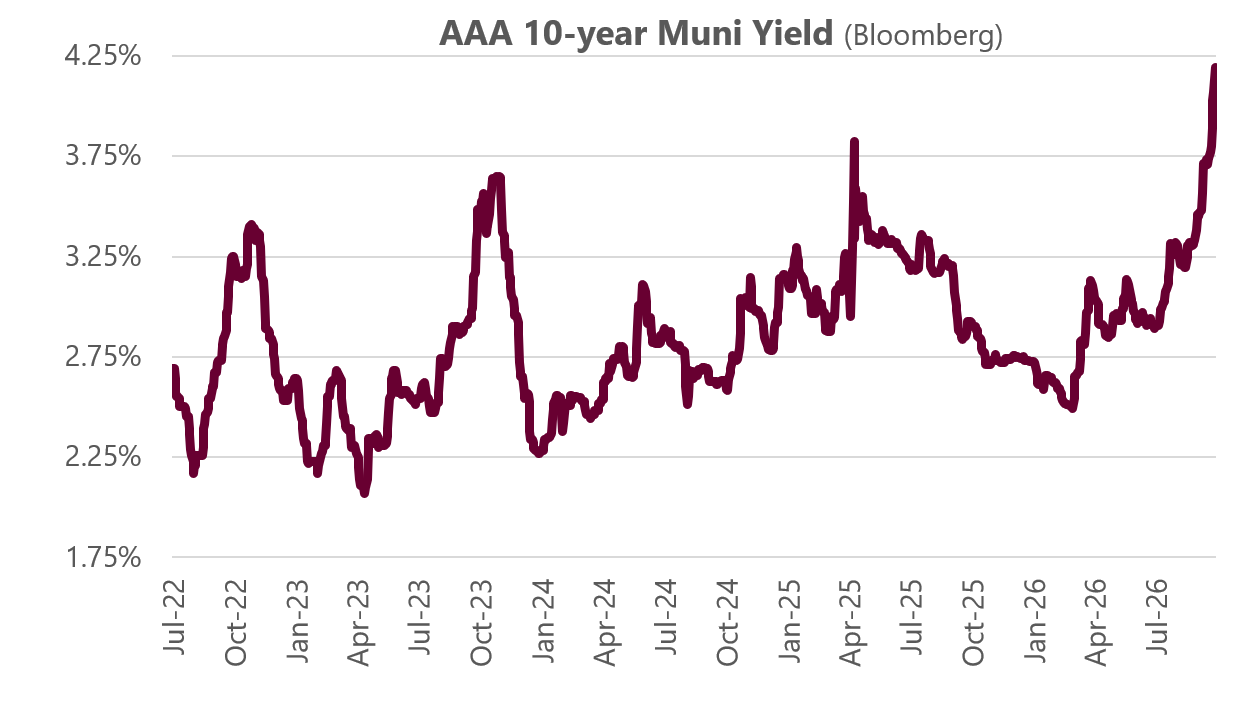 urns.
urns.
For our investors, the separate managed account (SMA) structure, combined with a laddered maturity strategy, helps avoid the need to realize losses during such periods. As bonds mature on a recurring basis, proceeds can be reinvested at higher prevailing yields.
Benchmark tax-exempt yields now range from the high 3% to 5%. Yields have increased following a spike in energy prices and a strong-to-strengthening underlying economy with low jobless claims and a still strong consumer. Some also point to heavy debt issuance from the U.S. Treasury and AI companies as creating a “crowding out” effect that pushes yields higher.
Though higher oil prices are causing headline inflation to print in the mid-3% range (above the Fed’s 2% target), core CPI inflation – which excludes food and energy costs – is in the mid-2% range. This is its lowest level since COVID. Prior to the Iran conflict, the market was expecting the Fed to cut, rather than hike rates. The recent rise in energy prices has since changed the market’s view.
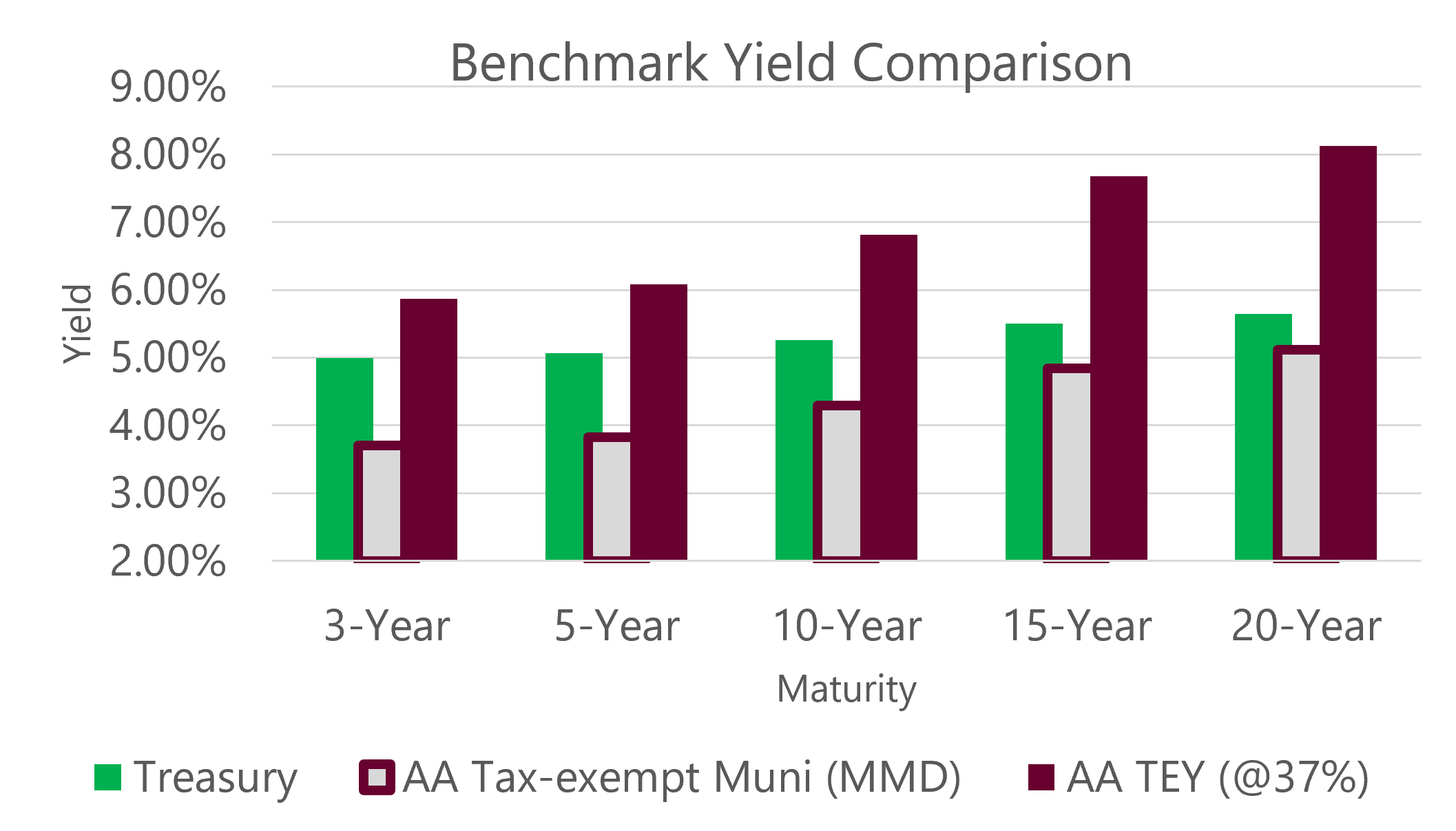
Source: Bloomberg & MMD, September 29, 2026; TEY = Taxable equivalent yield calculated at 37% bracket
The current Fed Funds rate is at 4% (upper bound) with the market pricing in 3 to 4 additional hikes that would bring the rate to 4.75% or 5.00%, respectively. The 2-year Treasury, currently yielding 4.88%, is a direct reflection of the market’s anticipation for more rate hikes.[4]
Will 2026 be a repeat of 2022, 2023, and 2025?
In all three periods, rates rose sharply, each time for different reasons. But they ultimately settled and moved significantly lower again, largely because underlying inflation faded and/or failed to keep escalating. In our view, the future path of inflation remains the single best indicator of where rates go from here.
The outlook is uncertain, as headline inflation is being driven by oil and refined products. The status of the Strait of Hormuz six months from now is anyone’s guess. The war in Ukraine is also pressuring refined product prices higher. Any long-lasting damage to oil infrastructure or transportation networks will certainly create price pressure for some time.
What is encouraging is that Core CPI inflation (think housing, medical care, transportation) is running at a 2.4% year-over-year pace.[5] This is the lowest level since 2021. Today’s elevated interest rates will likely continue to weigh on real estate prices, which represents more than one-third of the overall CPI composition. While Core inflation remains modestly above the Fed’s 2% target, at its current level and pace, it does not appear to warrant further rate hikes.
Regardless, headline inflation (driven by oil prices) will dictate the path of rates over the next three to six months. Core inflation only moves back into focus once oil stops climbing. The fundamental backdrop for the bond market to settle down is therefore in place, provided oil simply levels off.
Remember the Advantages of the SMA
“If you endure, the bonds will mature.”
Overall, our investors can take comfort in the SMA structure, where individual bonds have defined maturities and, absent a credit event, mature at par ($100). As a result, interim price declines are unrealized and do not necessarily impair the long-term income or principal value of the portfolio when bonds are held to maturity.
Over the years, we have had opportunities to lock in tax-free yields of 3%, then 4%, and now 5% for investors.[6] Today’s higher-yield environment presents another compelling opportunity to strengthen long-term portfolio cash flows.
Through a laddered SMA, recurring maturities continually return principal that can be reinvested at prevailing yields, allowing investors to systematically benefit from higher rates rather than trying to time the market. We believe investors should be actively taking advantage of today’s elevated tax-free yields to enhance future income and improve the portfolio’s long-term return potential.
Thank you for your confidence in our team. Please do not hesitate to reach out to your Investment Specialist or Portfolio Manager with any questions.
Sincerely,
Matt Bernardi
Sr. Vice President
[1] Source: Bloomberg, September 29th, 2026
[2] LMBITR Index as of 8/31/2026
[3] Based on the 37% federal income tax rate. State taxes not considered. Individual tax circumstances vary — consult a qualified tax professional.
[4] Source: Bloomberg, September 29th, 2026
[5] As of the August 2026 CPI report (released Sept 11, 2026)
[6] Source: MMD, September 29th, 2026